Animals

Freshwater Mussels

Freshwater Mussels Status Rating:

Poor

and staying the same

Here’s Why:

The freshwater mussel population has declined significantly in the Delaware River Watershed due to pollution, habitat loss, and climate change. Mussels are essential for clean water and the economy and should be a focus of protection and restoration efforts throughout the Delaware River Watershed.

Did you know that natural filters live in our streams?

Freshwater mussels, often unseen residents of our freshwater creeks and rivers, are essential contributors to the health of our waterways. Around the mid-20th century, mussel populations significantly declined and have not recovered. This section discusses the captivating world of freshwater mussels, the extraordinary services they provide to our ecosystems, the significant challenges they face, and the promising measures we are adopting to secure their future.

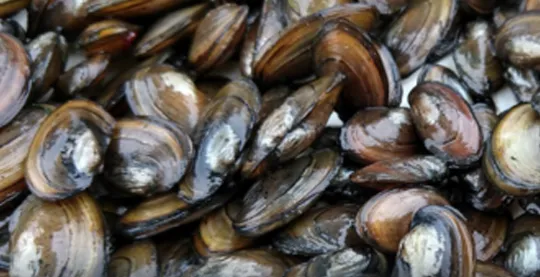
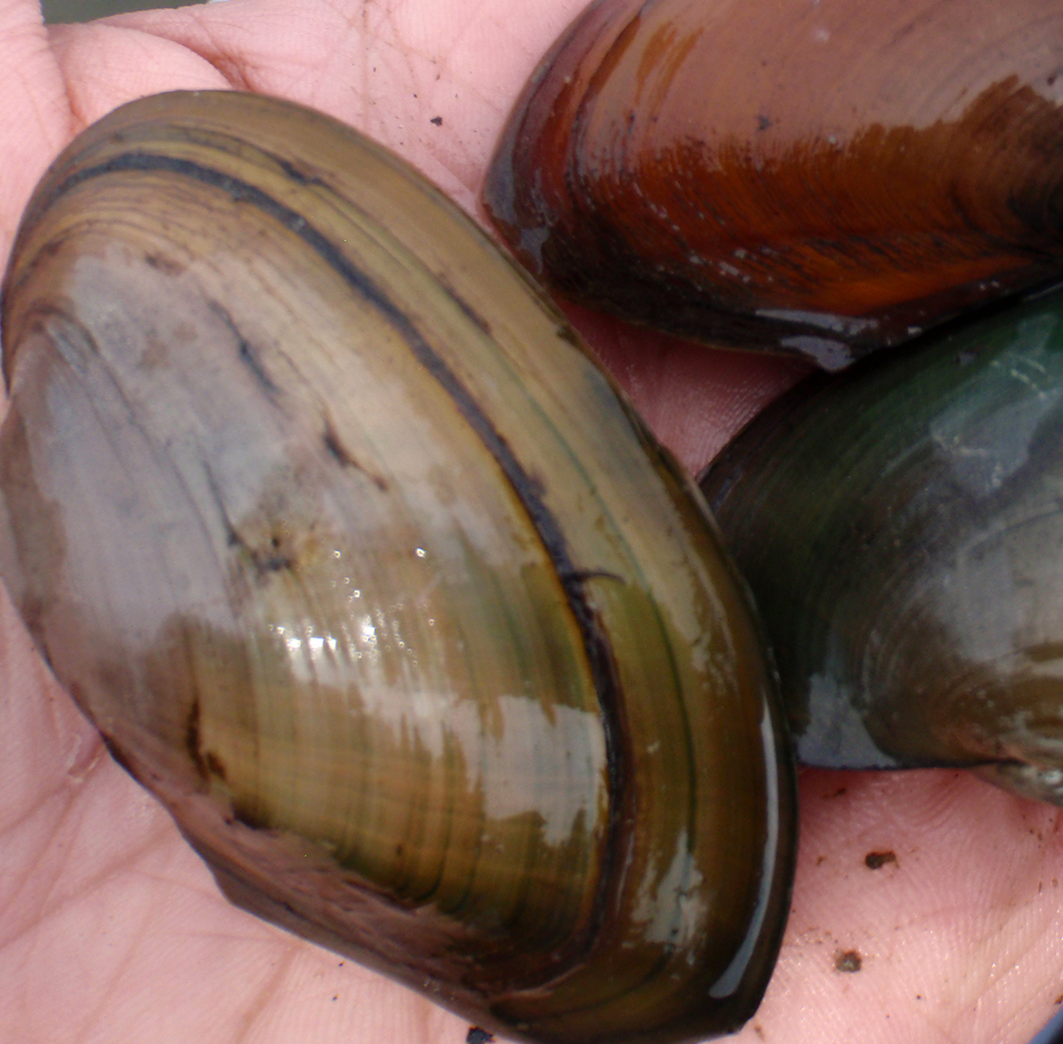
Freshwater mussels play a significant role in keeping our waterways clean. They act like tiny, living filters, sucking in particles suspended in the water. A healthy adult mussel can filter up to 10 gallons of water per day. Some mussel species can live up to 100 years. By simply existing in our streams, mussels improve water quality, promote biodiversity, and maintain a balanced ecosystem.

Unfortunately, there just aren’t enough mussels. They are the most imperiled group of animals in North America today due to various factors, including escalating stream pollution levels, loss of habitat, and the ripple effects of changing climate patterns. The problem is particularly severe in the Delaware River Watershed, home to 13 native mussel species.

Fish are essential to the mussel life cycle and fish migration barriers are a significant factor in mussel decline. Specific mussel species need a specific fish species to complete its reproductive cycle.

Female mussels release baby mussels, or larvae, into the water, leaving these larvae to briefly free-float until they can latch onto the gills of the correct host fish. The larvae stay on the gills for two to four weeks before eventually releasing themselves into the stream bed. Dams have lowered the abundance of fish species that mussels need for their life cycle. As a result,  the biodiversity, abundance, and range of our mussel species have also drastically decreased, indicating a severe imbalance in their habitats. A decline in mussel populations signals trouble for ecosystems. Because mussels are long-lived and tend to stay in the same place, freshwater mussels serve as indicators of site-specific conditions over long periods compared to shorter-lived, more mobile animals such as insects, fish, and birds.

Restoring the mussel population is a multi-pronged effort. Scientists are working to propagate mussels, but it’s also essential to tackle environmental threats such as stormwater runoff, manage water quality, and encourage the removal of defunct dams to promote free fish passage in our waterways.

With careful management and enhanced restoration, we can bolster mussel populations to withstand the challenges of our ever-changing future. The measured expansion of healthy freshwater mussel populations in the Delaware River Watershed requires careful management, consideration of freshwater mussels in restoration projects, and more vigorous conservation and restoration efforts.

Things You Can Do

  • Advocate for dam removal projects so fish can continue supporting the mussel species that evolved to co-exist with them.
  • Plan a rainy day or school field trip to the Philadelphia Water Department’s Fairmount Water Works Interpretive Center to view the freshwater mussel hatchery exhibit. There, you will see scientists studying mussels and propagating them to increase their numbers.

What is Being Done?

The Pennsylvania Department of Environmental Protection’s Coastal Resources Management Program uses sonar imaging to map freshwater mussel beds in Pennsylvania’s portion of the Delaware Estuary. Philadelphia Water Department, Philadelphia Department of Parks and Recreation, Partnership for the Delaware Estuary (PDE), Academy of Natural Sciences of Drexel University, John Bartram Association, and Independence Seaport Museum established the Aquatic Research and Restoration Center (ARRC) in 2018. Together, these partners are working to propagate and raise freshwater mussels to reintroduce these animals to Delaware River Watershed rivers and streams to improve water quality and habitat diversity. PDE’s Mussels for Clean Water Initiative (MuCWI) uses cutting-edge technologies to raise mussels in hatcheries, growing them until they are large enough to move to a grow-out facility like a stormwater retention pond before their eventual release into a natural stream bed or river where their continued progress is monitored. MuCWI’s objective is to eventually produce at least 500,000 juvenile mussels annually. Brandywine River Restoration Trust is removing dams, which benefit freshwater mussels by allowing for increased fish passage in streams and rivers. Higher fish passage will enable fish to regularly and easily assist natural freshwater mussel reproduction.

Building Connections

How do Freshwater Mussel populations connect to the Delaware Estuary Program’s Comprehensive Conservation and Management Plan (CCMP)? CCMP STRATEGY H3.3: Inventory, restore, and manage mussel populations. This freshwater mussel indicator status report is based on research compiled in the 2022 Technical Report for the Delaware Estuary and Basin (2022 TREB). Please refer to this document for more information.

JOIN US

Get the Latest News

This field is for validation purposes and should be left unchanged.

subscribe

Name(Required)