


About the Estuary
Estuaries are partially enclosed areas where rivers meet the sea. These unique environments contain a mix of freshwater and saltwater, with constantly shifting conditions influenced by tides, river flow, and weather. The Delaware Estuary connects all of us—whether we live in Philadelphia, far upstream near Hancock, New York, or along the Bay in places like Cape May, New Jersey, or Lewes, Delaware.
People
Estuaries are essential to nearby communities. They provide drinking water, support industry and food production, and offer recreation for millions of people. The Delaware Estuary is lined with critical wetlands that filter stormwater runoff and absorb pollution before it enters rivers and bays.
More than six million people live within the region, including residents of its three major cities: Philadelphia, Camden, and Wilmington. This highly developed corridor includes the world’s largest freshwater port, the second-largest petrochemical port, and five of the East Coast’s largest refineries.

Science
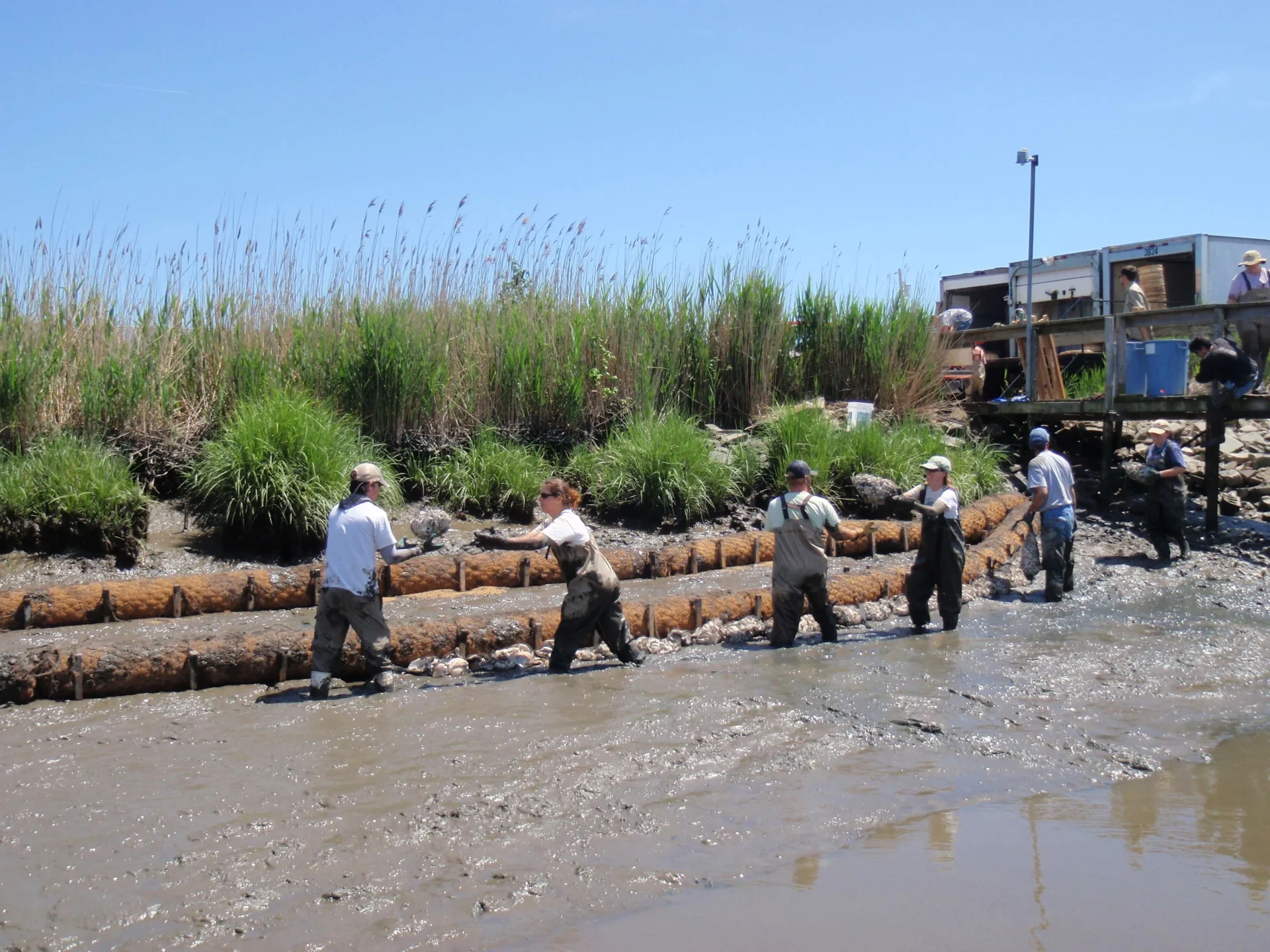
The Delaware Estuary faces many environmental challenges. Protecting it requires collaboration among community members, scientists, and industries. At the Partnership for the Delaware Estuary (PDE), some of our most important work focuses on research and restoration across the tidal Delaware River and Bay. See the “State of the Delaware Estuary” Report.
Nature
Estuaries are among the most productive ecosystems on Earth, supporting more wildlife births than any other habitat type. The Delaware Estuary provides critical habitat for more than 130 species of finfish, along with clams, oysters, and crabs.
It also hosts the second-largest concentration of migrating shorebirds in the Western Hemisphere and supports habitat for 15 species of waterfowl—over half a million birds that migrate through or spend the winter here. The Estuary also contains the world’s largest population of spawning horseshoe crabs.

Where is the Delaware Estuary?
The Delaware Estuary stretches from Trenton, New Jersey, and Morrisville, Pennsylvania, south to Cape May, New Jersey, and Cape Henlopen, Delaware. It includes all of the Delaware Bay and the tidal portions of the Delaware River. PDE’s work focuses primarily on the Lower Delaware River Basin, or the area labeled “Delaware Estuary” in the map above.


What is a Watershed?
A watershed is an area of land that drains into a river or other body of water. Runoff from rain and snow flows across the land, entering small creeks and streams within small watersheds. These smaller watersheds connect to larger ones, just as many tributaries feed a large river.
The Delaware River watershed includes 216 tributaries and drains 13,539 square miles across New York, Pennsylvania, New Jersey, and Delaware. Millions of people live within this vast watershed, and their actions affect water quality every day.
Help Save the Estuary!
Until the Clean Water Act of 1972, the tidal Delaware River and the waterways that flow to it were polluted with untreated sewage and industrial waste. Education, clean water laws, and hard work by PDE and our partners have returned our estuary to a much healthier state. But there is still plenty of work to be done. Your support is vital to our success. Protect clean drinking water, healthy communities, and beautiful natural places!


