

Common Name: Monarch Butterfly
Scientific Name: Danaus plexippus
Lifecycle Type: Perennial migratory insect (multi-generation life cycle)
Thrives In: Meadows, open fields, roadsides, gardens, parks, and anywhere milkweed and nectar plants grow
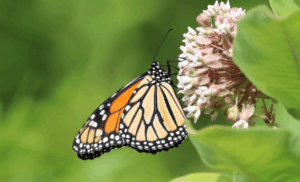
A monarch butterfly on common milkweed. Credit: Kristen Cooney
The monarch butterfly (Danaus plexippus) is one of the most recognizable butterflies in North America, known for its bright orange wings outlined in black. But what truly sets monarchs apart is their migration. Each year, monarchs travel thousands of miles across generations, moving between breeding grounds in the United States and Canada and overwintering
sites in central Mexico. While no single butterfly completes the entire journey northward, the last generation will fly up to 3,000 miles south, making their migration remarkable.
Monarch butterflies are in the Delaware Estuary every summer, and those from the north pass through in fall on their migration south. Interested in spotting them? They tend to be most active from mid-morning to early afternoon. During a cold front, they will often cluster on trees overnight, but you won’t see them on windy or rainy days when they stay hidden.
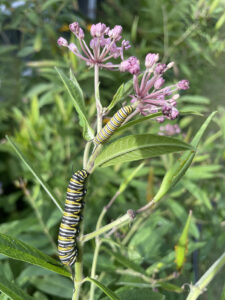
Monarchs depend on milkweed plants for survival. Milkweed is the only plant monarch caterpillars eat, and it is where adult monarchs lay their eggs. Without milkweed, monarch populations cannot reproduce. Adult butterflies also rely on a variety of native flowering plants for nectar, especially during migration when they need energy to continue their long journey.
In recent decades, monarch populations have declined due to habitat loss, pesticide use, and the reduction of native plants. As open spaces disappear and roadsides are managed more intensively, milkweed has become harder to find. This loss of habitat directly impacts monarchs and many other pollinators that rely on native plants.
Seeing a monarch in your neighborhood, local park, or garden is a reminder of how connected landscapes are across the continent. Supporting monarchs can be as simple as planting native milkweed and nectar plants or allowing patches of natural vegetation to grow. These small actions help provide the habitat monarchs need to continue one of nature’s most extraordinary migrations.
